Guides / Process
Swiss Machining vs Metal Injection Molding for Small Parts
November 1, 2026
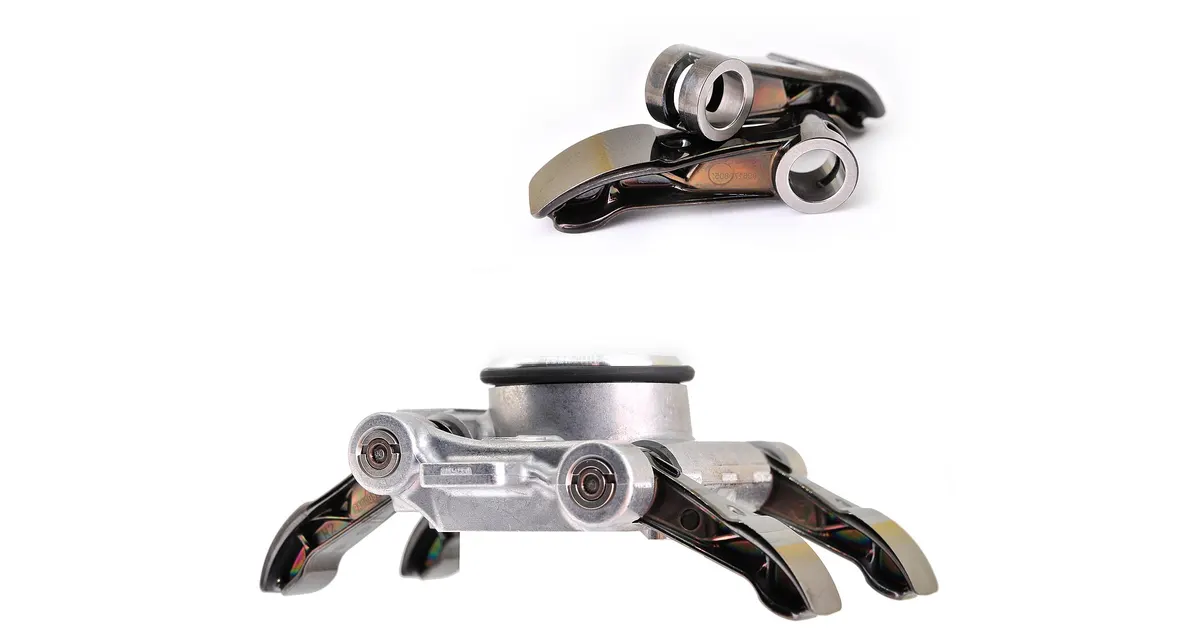
Metal injection molding (MIM) beats Swiss machining when the part is a small, complex three-dimensional shape that is needed in very large numbers, because one mold forms the shape with almost no cutting. Swiss machining beats MIM when the part is basically a turned shape, when it is slender or long, when tolerances are tight on diameters or when the volume does not pay for a mold. For many parts the answer is a hybrid: mold the shape, then machine the few features that need precision.
This guide compares the two on shape, tolerance, density, volume and risk, and shows what to include in an RFQ so both routes can be priced fairly. The guide to how Swiss-type turning works covers the lathe side.
How the two processes make a part
A Swiss-type lathe cuts the shape from bar. The bar passes through a guide bushing and tools remove metal close to the support, so slender parts stay straight and tolerances hold. Everything that is not the part leaves as chips, and a new part number needs a program and a setup.
MIM mixes fine metal powder with a binder, injects the mixture into a mold, removes the binder and sinters the part in a furnace. Wikipedia describes the steps as feedstock, molding, debinding and sintering. The molded part is oversized, and sintering shrinks it by about 15 percent in each dimension, so the mold is cut larger to compensate. For stainless steel the sintering temperature is given as 1,350 to 1,400 °C.
That difference sets the economics. Machining pays per part, in cycle time and bar. MIM pays up front, in a mold, then adds little per part. The Metal Injection Molding Association (MIMA) says medium to high volumes, from thousands to millions of parts a year, are typically needed to amortize tooling and start-up costs.
Shape: where each process fits
MIM favors shapes that are hard to cut. MIMA lists cross holes, angled holes, side holes, internal threads, splines, grooves, undercuts and cantilevers as features MIM can produce, and notes that it can consolidate a multi-part assembly into one piece. The photograph at the top shows the kind of part involved, a curved arm with bosses that would take several setups to machine from solid.
Size is a limit. Wikipedia gives a shot limit of 100 grams or less and describes the ideal part as at most 25 mm in maximum size and about 10 grams in mass. A part longer than 20 cm is described as unsuitable. Wall thickness matters as much as size, since thin and thick sections shrink differently during sintering.
Swiss machining favors turned shapes, and long and slender ones in particular. The sliding headstock keeps the cut close to the guide bushing, so a long thin pin or shaft that would sag in other processes stays straight. In typical shop practice the lathe covers about 1 to 32 mm diameter. A long slender shape is a poor fit for MIM in practice, because the part is porous and fragile before sintering and shrinks substantially, which makes straightness hard to hold. Treat that as a practical caution and ask a MIM supplier about your length to diameter ratio.
A third group is simple turned parts at moderate volume. A pin, a bushing or a shaft with a groove has little shape complexity to consolidate, so MIM has nothing to save and the mold is overhead. Machining is usually the cheaper route for them, even at high volume, unless the quantity is very large.
Tolerance, finish and density
Wikipedia states that dimensional tolerances of ±0.3 percent are common for MIM, with closer tolerances requiring machining. That page carries a note asking for more citations, and suppliers publish different figures, so treat it as directional and ask for capability data on your part. On a 10 mm feature, ±0.3 percent is ±0.03 mm.
Compare that with typical Swiss production ranges. Our tolerances guide lists short turned diameters at about ±0.005 to ±0.013 mm in free machining materials. The two processes are not equal on a tight diameter, and the usual answer is that MIM parts get machined on the critical features.
On surface finish, MIMA says MIM can reach 32 rms or better. Our surface finish guide lists what comes off a Swiss lathe, about Ra 0.8 to 1.6 µm without extra work. Both are suitable for most functional parts and both are affected by what comes after, such as plating.
Density is the difference to check. MIMA’s comparison table lists density at 98 percent for MIM and 100 percent for machining, and Wikipedia gives 96 to 99 percent for vacuum sintered parts. A part machined from bar has the properties of the bar. A sintered part has a small amount of residual porosity, so properties such as elongation and fatigue life can differ. MPIF Standard 35, the materials standard for MIM parts, is where the property data are published, and it is sold by MPIF, so ask your supplier which grade on it they use.
Materials
Stainless steels are the most common MIM material according to Wikipedia, with cobalt-chrome, 17-4 PH, titanium alloys and tungsten carbides also named. MIMA says MIM works with most ferrous and nonferrous alloys and suits materials that are hard to machine or work harden.
The overlap with Swiss machining is large in stainless steels, titanium and cobalt-chrome. The difference is availability. Swiss shops buy certified bar in almost any grade, including free machining grades, while MIM suppliers work from a list of qualified feedstock grades. If your drawing calls for a specific grade or a standard, check that the MIM supplier has that feedstock before you compare prices.
Volume and tooling risk
MIM needs a mold, and the mold fixes the shape. A design change means rework or a new mold, and a forecast that falls short leaves tool cost unrecovered. MIMA lists multi-cavity tooling as one way volume lowers the unit cost, which only pays when the quantity supports it.
Swiss machining carries less up-front risk. Our guide to tooling and NRE charges explains what a Swiss quote may include, and the minimum order quantity guide explains why small lots are practical. A design change is a program edit.
No public source gives a single break-even volume for MIM against machining. The number depends on the mold cost, the cavity count, the alloy and the part. Ask for both quotes at the same quantities and plot them.
Comparison table
| Question | Swiss-type machining | Metal injection molding |
|---|---|---|
| How is the shape made? | Cut from bar | Molded from powder, sintered |
| Part-specific tooling | Programs, inserts, setup | Mold per part number |
| Strong shapes | Slender, turned, long | Small, complex, 3D, consolidated |
| Typical size | About 1 to 32 mm diameter | 100 g or less per shot, ideal about 25 mm |
| Tolerance as made | About ±0.005 to ±0.013 mm on a short diameter | About ±0.3 percent commonly quoted |
| Density | 100 percent, bar | 96 to 99 percent, MIMA lists 98 |
| Design change | Program edit | Mold rework |
| Best fit | Low to high volume, tight diameters | High volume, complex shape |
A short decision test
Four questions settle most cases:
- Is the part basically a turned shape? If yes, quote Swiss first.
- Is it a complex shape with cross holes, undercuts and several bodies in one? If yes, ask a MIM supplier.
- Is the annual volume in the thousands to millions? If not, MIM is unlikely to pay.
- Does one feature need a tolerance that sintering will not hold? If yes, plan a machined feature on either route.
For the hybrid case, send the drawing and say which features are critical. A shop can quote the machining step on a sintered blank, or the whole part from bar.
What to put in the RFQ
Send the drawing and STEP file through the RFQ form with:
- Material and grade, with any standard or certificate requirement.
- Annual volume now and in two years, plus the lot size.
- Critical features, tolerances and datums.
- Whether threads, cross holes and undercuts are required and where.
- Finish, plating, passivation and heat treatment.
- Property or test requirements, if the part is loaded.
We match the part with up to three shops that run Swiss-type lathes and reply within 24 business hours. If your part is a MIM candidate, a shop will often say so, which is a useful thing to learn before a mold is cut.
Sources
- Designing with MIM, Metal Injection Molding Association: density, volume, features, comparison with machining.
- Metal injection molding, Wikipedia: process steps, shrinkage, size and tolerance figures (page flagged for more citations).
- MPIF Standard 35, Materials Standards for Metal Injection Molded Parts: the materials standard for MIM parts.
Frequently asked questions
Is metal injection molding cheaper than Swiss machining?
At high volume, for a complex shape, often yes, because one mold makes the shape with little machining. At low volume or for a simple turned shape it usually is not, because the tool cost has to be recovered. MIMA says medium to high volumes, from thousands to millions of parts a year, are typically needed.
Can MIM hold the same tolerances as a Swiss lathe?
Not on every feature. A figure of about ±0.3 percent of the dimension is commonly quoted for sintered MIM parts, which is ±0.03 mm on a 10 mm feature. Swiss machining holds tighter on a short turned diameter. Many MIM parts get a machining step on the critical features.
Is a MIM part as strong as a machined part?
Close, but not identical. MIMA lists MIM density at 98 percent against 100 percent for machined bar, and sintered parts can differ in ductility. For a fatigue or pressure critical part, ask for property data on your alloy and test your own samples.
Can a part be made by MIM and finished on a Swiss lathe?
Yes. A sintered blank can be molded to a complex shape and then machined on its critical diameters. This hybrid route is common when one or two features exceed what sintering holds. Plan the datums and the stock left for machining before the mold is cut.
Need a quote for this part?
Send the drawing. We match you with up to 3 Swiss shops and reply within 24 business hours.
Get matched with a Swiss shop