Swiss Machining Services for Small Precision Parts
Send a drawing of your small turned part. We match it with shops that run Swiss-type lathes every day. Reply within 24 business hours.
Is your part a Swiss part?
Swiss-type lathes are built for small, slender turned parts in volume. Some parts are cheaper on a conventional CNC lathe. Tick what applies to yours.
Typical Swiss parts
- Bone screws and pins
- Dental implant parts
- Connector contacts
- Valve spools and nozzles
- Sensor housings
- Shafts and pinions
- Threaded fasteners
- Probe tips and needles
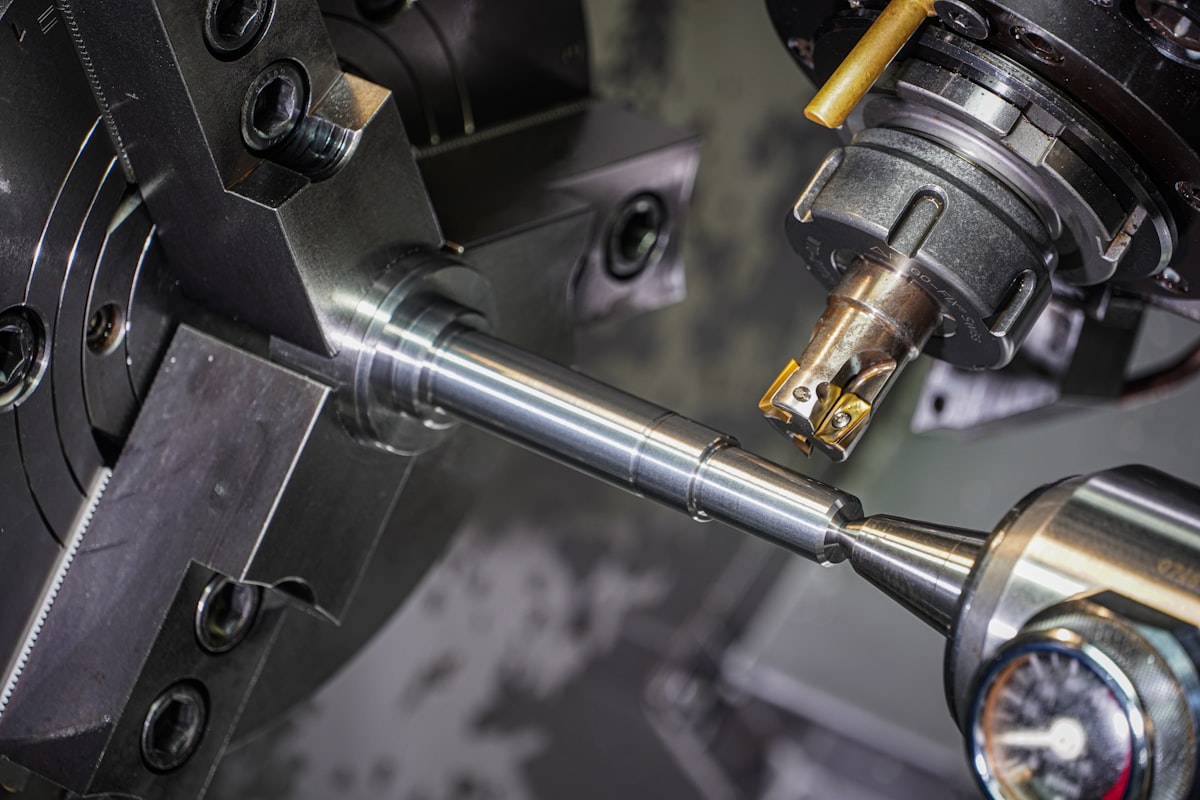
On a conventional lathe a long thin part bends away from the tool, so the shop needs a tailstock, a steady rest or several light passes. On a Swiss lathe the bar is supported a few millimeters from the cut on every pass.
Swiss turning or a conventional CNC lathe?
Both make round parts. The difference is where the part is held and how it moves. That decides which one quotes your part cheaper.
Swiss-type lathe
The headstock grips the bar and slides it forward through a guide bushing. The tools stay put and cut next to the bushing.
- Right for parts under about 32 mm with a long length to diameter ratio
- Turns, drills, mills flats and cross holes in one cycle, then finishes the back on a sub spindle
- Longer setup, faster cycle: best from a few hundred pieces up
Conventional CNC lathe
The part is held in a chuck and does not move along its axis. The turret moves the tool along the part.
- Right for larger diameters, short stubby parts and castings or forgings
- Quicker to set up, so often cheaper for 1 to 50 pieces
- Long thin parts need a tailstock or steady rest and slower passes
Materials and typical specs
What to expect when you ask a Swiss shop to quote. These are typical ranges, not promises. The shop that quotes you confirms what it can hold on your geometry and material.
| Spec | Typical range | Note |
|---|---|---|
| Bar diameter | 1 to 32 mm | Some machines go to 38 mm. Below 1 mm is a specialist job. |
| Length to diameter | Up to 10:1 or more | The guide bushing supports the bar right next to the cut. |
| Diameter tolerance | ±0.005 to ±0.013 mm | Tighter is possible with grinding or in-process gauging. |
| Surface finish | Ra 0.4 to 0.8 µm | As turned, on free machining grades. |
| Cycle time | 15 s to a few minutes | Depends on features, material and the number of tools used. |
| Material | What changes | Typical tolerance |
|---|---|---|
| Stainless 303 / 304 / 316L | 303 is the free machining grade for high volume. 316L for medical, food and fluid parts. | ±0.005 to ±0.013 mm on diameters |
| 17-4 PH stainless | Heat treatable. Common for instrument parts and aerospace pins. | ±0.005 to ±0.013 mm on diameters |
| Titanium Grade 5 / Grade 23 | Bone screws and dental parts. Needs sharp tools, low heat and good chip control. | ±0.008 to ±0.013 mm on diameters |
| Brass C360 | The fastest material to cut on a Swiss lathe. Contacts, fittings and inserts. | ±0.005 to ±0.01 mm on diameters |
| Aluminum 2011 / 6061 / 7075 | 2011 cuts cleanly at high volume. 6061 and 7075 need chip control on long parts. | ±0.008 to ±0.013 mm on diameters |
| PEEK, POM (Delrin) | Thin sections flex under the tool. Plastics move with heat and moisture. | ±0.025 mm is realistic |
Industries we match Swiss work for
Each industry brings its own paperwork. Mention material certs, first article inspection, cleanliness or lot traceability in your RFQ so we match shops that already work that way.
Medical and dental
Bone screws, implant abutments, instrument pins in titanium and 316L.
Connectors and electronics
Contact pins, sockets and RF connector bodies in brass and copper alloys.
Aerospace fasteners
Pins, bushings and fittings in 17-4 PH, titanium and A286.
Fluid power
Valve spools, nozzles and fittings with tight bores and seats.
Sensors and automotive
Sensor housings, injector parts and small shafts in high volume.
Watch and instrument
Pinions, arbors, tiny screws and shafts. Where Swiss turning started.
How it works
One RFQ from you. A short list of Swiss shops that fit. No bidding platform and no middleman on the order.
Send your RFQ
Upload a STEP file or PDF drawing and tell us material, largest diameter, yearly quantity and tolerance. Takes about three minutes.
We match up to 3 shops
We read the drawing and pick shops whose bar capacity, tooling and volume fit the part. You hear from us within 24 business hours.
Shops quote you directly
Each shop contacts you with a quote. You compare, ask questions and place the order with the one you choose.
What drives the price of a Swiss part
At volume, a Swiss quote is mostly seconds per part times the machine rate. On small runs, setup dominates. If a price looks high, one of these is usually why.
- Cycle timeSeconds per part decide the price at volume. Ten seconds saved on 20,000 parts is more than 55 machine hours.
- Bar materialSwiss machines need straight, often ground bar. Titanium and 316L cost more per meter and cut slower than brass or 303.
- Setup and toolingLoading 10 to 20 tools, the program and first part checks are paid once per job. On small runs they are most of the price.
- Tolerance and inspectionMicron-level diameters need gauging during the run and more checks per lot. Tolerance only what matters.
- QuantitySetup spreads over more parts as volume rises. Quote your yearly volume, not just the first order.
- Secondary operationsDeburring, passivation, plating and heat treatment add cost and days. Say which ones you need up front.
Have a drawing ready?
Send the short version now. We will ask for anything missing. If you prefer to give full details up front, use the full RFQ form.
Your files go only to the shops we match. Ask for an NDA and nothing is shared until it is signed.
Run Swiss-type lathes? Get RFQs that fit them.
Shops see a preview of each request before paying for it and talk to the buyer directly. We take no commission on the order.
Questions buyers ask
Something else? Email .
Is this service free for buyers?
Yes. You pay nothing to send an RFQ or to receive quotes. Shops pay us for matched requests. Price, terms and delivery are agreed between you and the shop.
Who sees my drawing?
Shops first see a short preview with part type, material, diameter, quantity and tolerance. It does not include your name, company or files. Your contact details and files go only to the shops we match, up to 3. If you ask for an NDA, we hold the files until it is signed.
How many quotes will I get?
Up to 3. If only one or two shops fit your diameter, material and volume, we send it to fewer rather than fill the list.
Do you machine parts yourselves?
No. We are a matching service, not a machine shop. The shops that quote you run the Swiss-type lathes, and you place the order with them.
Does Swiss mean the parts are made in Switzerland?
No. Swiss machining names a type of lathe, the sliding headstock lathe first built for watch parts. Shops that run them are all over the world. You pick a preferred region on the RFQ form: North America, Japan, Korea, the rest of Asia or any.
What quantity makes sense for Swiss machining?
Swiss-type lathes pay off from a few hundred pieces up to hundreds of thousands. Setup takes longer than on a conventional lathe, but each part comes off faster and finished on both ends. For 1 to 50 pieces a conventional CNC lathe is often cheaper, unless production volumes follow.
Guides for Swiss machining buyers
- Process
Design for Swiss Machining: Rules That Cut Part Cost
How drawing choices change a Swiss machining quote: length to diameter ratio, standard tools, threads, cross holes, tolerances and surface finish callouts.
- Process
Guide Bushing or Not: How Swiss Machine Shops Decide
When a Swiss shop runs with a guide bushing and when without: L/D ratio, bar quality, remnant waste, cost per part and what each mode means for your quote.
- Process
How Swiss-Type Turning Works and What It Is Good For
How a Swiss-type lathe works: sliding headstock, guide bushing, live tools and sub spindle. Which parts it suits, which it does not and what to send to quote.